

Engineered for global export compliance, rapid local market penetration, and exceptional active ingredient efficacy.

Strategic insights into import substitution, foreign exchange optimization, and regional manufacturing dynamics across Addis Ababa and East Africa.
Ethiopia represents one of Sub-Saharan Africa’s most rapidly expanding consumer markets, driven by a population exceeding 120 million and accelerated urbanization across cities like Addis Ababa, Hawassa, Adama, and Dire Dawa. Traditionally, local FMCG distributors relied heavily on fully packaged finished liquid laundry softeners imported from Europe or Asia. However, elevated international container freight costs—where shipping 90% water weight incurs massive margin loss—have made imported finished goods economically unsustainable.
By partnering with our contract manufacturing hub, Ethiopian brand owners transition toward high-density liquid concentrates (1:4 to 1:10 dilution ratios) or bulk IBC drum shipments. Local bottling and packaging in Ethiopian industrial parks (such as Hawassa, Bole Lemi, or Kilinto) significantly slashes landed unit costs, directly supporting the Ethiopian Ministry of Industry's import substitution mandates while preserving foreign currency reserves.
Foreign exchange allocation managed by the National Bank of Ethiopia (NBE) remains a critical consideration for commercial importers. Importing raw chemical compounds and concentrated bases under HS Code 3402.20 (Surface-active preparations) carries more favorable tariff structures and higher customs prioritization than fully packaged retail consumer goods.
Our factory provides specialized industrial flexitanks (holding 24,000 liters) and concentrated bases that allow Ethiopian importers to stretch their USD allocations by 300% to 500% per metric ton of active raw material. We assist in full documentation—including Letters of Credit (L/C) compliance, Certificate of Analysis (CoA), and Ethiopian Food and Drug Authority (EFDA) sanitary clearance certificates.
Technical superiority achieved through cationic esterquat chemistry, mineral chelation matrices, and microencapsulated aroma release systems.
Legacy softeners utilized non-biodegradable Dihydrogenated Tallow Dimethyl Ammonium Chloride (DHTDMAC), which builds up greasy residues on cotton fibers over repeated washes. Our laboratory formulates exclusively with vegetable-derived Di-esterquat quaternary ammonium compounds. These cationic surfactants carry a positive electrical charge that naturally aligns with the negative electrostatic charge of cotton and synthetic fabrics, neutralizing static cling while imparting velvet-soft tactile hand feel without clogging textile pores.
Water resources throughout Ethiopia—particularly municipal and borehole water in the Great Rift Valley region—contain high concentrations of dissolved Calcium ($Ca^{2+}$) and Magnesium ($Mg^{2+}$) minerals (water hardness often exceeding 250–400 ppm TDS). Standard softeners curdle or lose active suspension in hard water. We integrate polycarboxylate and amino-phosphonate sequestering matrices that bind heavy mineral ions, ensuring liquid stability, preventing fabric yellowing, and maintaining viscosity across all water conditions.
Under high-altitude ultraviolet sun exposure in places like Addis Ababa (2,350 meters above sea level), conventional perfume oils dissipate rapidly during outdoor line-drying. Our R&D incorporates polymeric micro-encapsulated fragrance technology. Perfume capsules electrostatically anchor into fiber weaves and remain intact after drying. Mechanical friction during garment wear, movement, or ironing ruptures these micro-capsules, providing continuous fragrance release for up to 30 to 45 days post-wash.
Compare generic commodity liquid softeners with ORIZI’s Ethiopian-engineered concentrated formulations.
| Performance / Chemical Parameter | Generic Household Softener | ORIZI Standard Ready-to-Use | ORIZI Ethiopian Hard-Water Concentrate | Industrial Laundry Softener |
|---|---|---|---|---|
| Cationic Active Content (%) | 3% - 5% Standard Quat | 8% - 12% Esterquat | 18% - 35% High Density | 25% - 40% Technical Grade |
| Hard Water Tolerance (TDS ppm) | Fails above 150 ppm | Stable up to 250 ppm | Stable up to 500+ ppm | Stable up to 450 ppm |
| Fragrance Retention Period | 1 to 3 Days | 14 Days Micro-cap | 30 to 45 Days Friction-Release | 7 to 14 Days High Intensity |
| Biodegradability Rating | Poor (Legacy DHTDMAC) | Readily Biodegradable | 100% Eco-Esterquat | Readily Biodegradable |
| UV & Anti-Yellowing Shield | None | Basic Optical Protection | Advanced Benzotriazole UV Filter | Commercial Wash Shield |
| Shipping Volume Efficiency | 1x Base Volume | 1.5x Efficiency | 4x - 10x Freight Savings | 5x Industrial Drums |
From retail consumer brands to industrial textile parks and diplomatic hospitality suites.
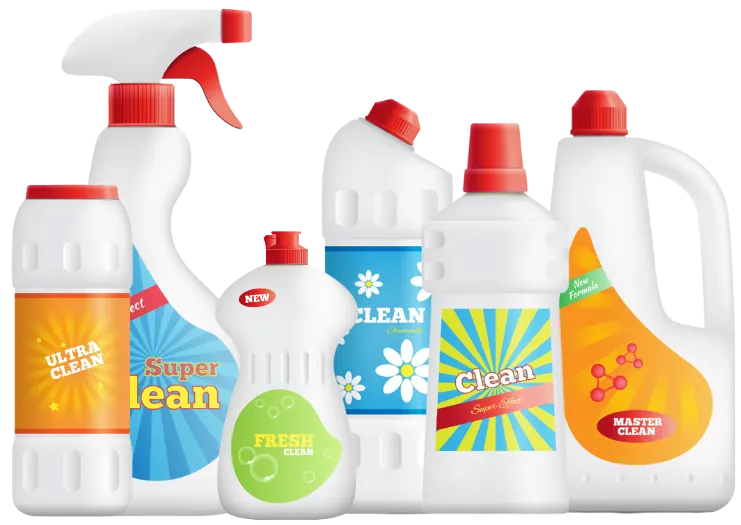
As modern retail channels expand across major Ethiopian metropolitan areas (such as Friendship Hypermarket, Bambis, and Shoa Supermarket in Addis Ababa), local consumer brand managers require shelf-ready, high-aesthetic fabric care lines. We supply turnkey private labeling—providing ergonomically designed 500ml, 1 Liter, and 2 Liter HDPE/PET bottles featuring anti-drip dosing caps, tamper-evident induction seals, and custom bilingual labels compliant with Ethiopian trade packaging norms.
Addis Ababa hosts international bodies including the African Union Headquarters and the United Nations Economic Commission for Africa (UNECA), maintaining over 100 international diplomatic missions. The luxury hotel sector demands institutional fabric softeners capable of conditioning heavy bed linens and towels during high-capacity tunnel washes. Our formulations neutralize residual alkaline wash detergent, prevent skin irritation, and leave a subtle, fresh linen aroma suitable for luxury guest suites.
Ethiopia's flagship industrial parks—including Hawassa Industrial Park, Bole Lemi, and Kombolcha—serve as major manufacturing hubs exporting finished apparel to Europe and North America. Industrial apparel mills require specialized cationic finishing softeners applied during post-dyeing washing steps to impart smooth fabric drape, wrinkle recovery, and improved sewing machine needle penetration. We supply bulk 1,000L IBC totes and flexitanks engineered to seamlessly integrate into industrial automated dosing systems.
The intense solar radiation and dry air of the Ethiopian plateau can cause cotton fabric fibers—such as traditional Ethiopian highland cotton used in Habesha Kemis garments—to become stiff, rough, and brittle when sun-dried. Our formulas contain specialized amino-silicone polymers and UV-blocking agents that shield cotton cellulose from photo-oxidation, preserving traditional garment elasticity, whiteness, and hand feel.
Over two decades of OEM/ODM manufacturing mastery, supported by 6 specialized group operating entities.
Our multi-disciplinary chemistry laboratory houses over 5,000 market-tested proprietary formulas. We provide full custom chemical synthesis—matching target viscosities, color tones, and custom fragrances (such as Ethiopian Rose, Jasmine, Fresh Linen, or Lavender blends).
Equipped with modern high-speed automated liquid filling lines, high-shear emulsification reactors, and inline capping systems capable of yielding over 60,000 retail units per day alongside daily bulk chemical output exceeding 50 metric tons.
Operating under ISO 9001:2015 Quality Management, ISO 22716 / GMP compliance, ISO 14001 Environmental standards, and JAKIM Halal Certification (guaranteeing 100% animal-fat-free formulas). SEDEX/SMETA audited for ethical global supply chain compliance.
Key logistical, regulatory, and technical questions answered by our export division.
We provide flexible MOQs tailored to your business scale. For ready-to-use bottled retail softeners (500ml to 2L), our standard MOQ starts at 5,000 units per formulation variant. For bulk liquid concentrate imports in flexitanks or 1,000L IBC totes, our MOQ starts at 3 metric tons, allowing local bottling operations in Ethiopia to maximize shipping efficiency and lower unit production costs.
We understand the foreign currency structures administered by the National Bank of Ethiopia (NBE). We accept confirmed Irrevocable Letters of Credit (L/C at sight) from reputable Ethiopian commercial banks. Furthermore, by supplying concentrated bases under raw material HS Codes (HS 3402.20), we enable Ethiopian buyers to maximize the volume of active product produced per USD allocated.
Shipments are loaded in 20ft or 40ft sea containers and dispatched via major ocean freight lines directly to the Port of Djibouti—the main transit gateway for landlocked Ethiopia. Ocean transit from our factory port takes approximately 14 to 20 days. From Djibouti, inland truck transit to Modjo Dry Port or Addis Ababa bonded warehouses takes approximately 3 to 7 days.
Yes. Our chemical engineers formulate specifically for your regional target water profile. By incorporating amino-phosphonate and polycarboxylate chelating matrices, our fabric softeners resist precipitation in hard mineral water (up to 500 ppm TDS), ensuring that active cationic esterquats remain fully effective during rinse cycles.
All ingredients used in our contract manufacturing facility meet international safety profiles (EU REACH, US FDA, and ISO standards). We provide a complete export documentation dossier—including Certificate of Analysis (CoA), Safety Data Sheets (SDS/MSDS), Batch Production Records, and Free Sale Certificates—to streamline product registration with the EFDA.
Absolutely. We offer complete custom fragrance matching—from fresh floral blends like Ethiopian Rose and Lavender to modern laundry perfumes. Our design team assists with container selection (ergonomic handle bottles, wide-mouth measuring caps) and customized bilingual labeling (English and Amharic) to ensure high consumer appeal on Ethiopian retail shelves.
Partner with an established international contract manufacturer offering low MOQs, custom chemical formulation laboratories, fast sample dispatch (1–2 days), and end-to-end export support for East Africa.
Contact Us