


Expertise in OEM/ODM Manufacturing
Discover leading formulations, regulatory updates, and market trends.
Supplement & Functional Food
Premium vitamins, functional beverages & nutrition formulas.
Cosmetics, Makeup & Skincare
Cutting-edge formulations backed by science and market demand.
Personal Care & Hair Care
Daily routine essentials crafted for your brand's growth.
Perfume & Fragrance
Crafted perfumes & essential oils for modern brand lines.
Medical Device
MDA-licensed, ISO 13485-certified OEM medical products.
An OEM Weight Management Supplement is a product made by a contract manufacturer for another company’s brand. The brand owner may define the audience, format, and positioning. The manufacturer helps turn that brief into a producible formula, such as capsules, powder, or single-serve sachets. A scoop, a label draft, and a batch record all matter.
For context, this introduction uses a fictional expert rather than presenting an invented quotation as a real industry statement. Fictional formulation consultant Maya Chen puts the central challenge this way: “A good formula must make sense on paper, on the production line, and on the label.” It is a useful standard, though not a substitute for independent review. Real projects need qualified professionals to assess ingredient specifications, dosage feasibility, stability, and evidence behind product claims.
OEM work is more than choosing ingredients from a catalog. Teams review sourcing documents, test samples, check flavor and mixability, and confirm that packaging protects the product during storage. They also need clear agreements on quality controls, responsibilities, and batch documentation. Details can shift between sample and full production. That deserves attention. A polished prototype does not guarantee the same experience in every finished batch. Brands should ask direct questions, verify records, and avoid promises that outrun the available evidence.
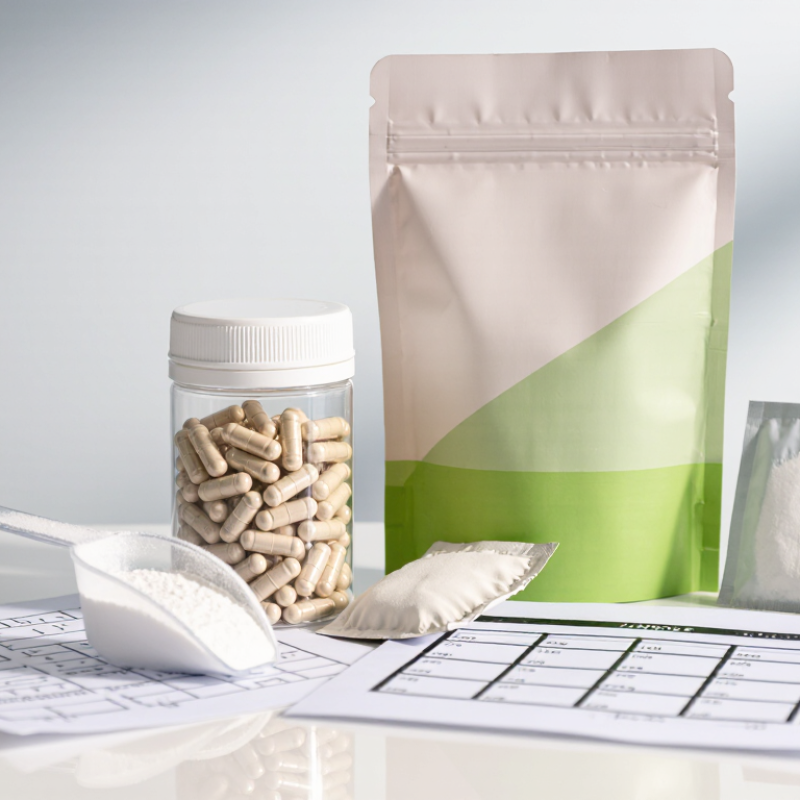
An OEM weight management supplement is a product manufactured for another company under its specifications. The buyer may define the formula, serving size, capsule format, packaging, and quality requirements. The manufacturer supplies production expertise, testing systems, and batch documentation. It is not simply a generic product with a new label.
Demand is growing as weight-related health concerns expand. The World Obesity Federation’s World Obesity Atlas 2024 estimates that more than 1.5 billion people could live with obesity by 2035. Grand View Research valued the global dietary supplements market at approximately 177.5 billion dollars in 2023. These figures show commercial potential, but they do not prove that every weight management formula works.
A responsible OEM process begins with evidence-based ingredient selection. It should review human studies, safe intake levels, allergen controls, and possible medicine interactions. Independent identity, purity, heavy-metal, and microbial testing add practical protection. Manufacturing records should connect raw materials to each finished batch. Yet quality systems are not perfect. Testing may miss poor consumer adherence or unrealistic expectations. A supplement can support a structured lifestyle, but it should not be presented as a replacement for medical care, balanced nutrition, or physical activity. Clear claims matter. Product developers should also reassess the formula when new safety data appears.
What Is an OEM Weight Management Supplement?
How OEM Supplement Production Works
OEM production allows a business to develop a weight management supplement using a qualified manufacturer’s facilities and services. The process usually starts with a product brief: intended format, target audience, ingredient preferences, serving size, and budget. A formulator then checks whether the proposed blend is practical to produce and whether each ingredient can be supported by suitable quality documentation. Good decisions begin on paper.
The formula moves into sample development. A small batch lets the team check taste, texture, capsule size, or how a powder mixes in water. Changes may be needed; a sample that looks fine on a screen can feel gritty in a glass. It is worth reviewing the details rather than rushing to approve it. Not every idea works.
Before full production, the manufacturer should confirm raw material specifications, supplier records, and testing plans. Depending on the product and market, checks may include identity, purity, strength, and microbial quality. The finished product is made in controlled batches, then filled, sealed, labeled, and inspected. Batch records help connect ingredients with production dates and test results. Ask how deviations are handled, too; paperwork alone does not guarantee a flawless run. After release, retain samples and clear complaint procedures can support ongoing quality review. OEM arrangements differ, so responsibilities for formula ownership, label review, and testing should be agreed in writing.
| Production Dimension | Typical OEM Practice | Indicative Data | Quality or Compliance Consideration |
|---|---|---|---|
| Product concept | The buyer provides a target consumer profile, dosage form, preferred ingredients, positioning, and market requirements. | Usually defined through a product brief before formulation begins. | Claims should be scientifically supportable and appropriate for the destination market. |
| Common dosage forms | Capsules, tablets, powders, ready-to-mix sachets, gummies, and liquid products may be developed through OEM production. | Capsules and powders generally require fewer processing steps than liquids or gummies. | The selected form affects stability, packaging, serving size, and production equipment. |
| Ingredient selection | Ingredients may include fiber, protein, vitamins, minerals, botanical extracts, or other permitted substances. | Each ingredient must have a defined specification, intended use, and target amount per serving. | Identity, purity, potency, contaminants, allergens, and applicable legal status should be verified. |
| Formulation development | A qualified formulation team converts the product brief into a reproducible formula and manufacturing procedure. | Pilot batches are commonly used to assess flow, mixing, dissolution, texture, taste, or fill weight. | The finished formula should meet product specifications throughout its intended shelf life. |
| Minimum order quantity | Minimum order quantities depend on the dosage form, formulation complexity, packaging, and production line. | A practical commercial range may be about 1,000–10,000 finished units, while custom projects can require more. | The confirmed quantity should be agreed after reviewing material requirements and line capacity. |
| Sampling and approval | A laboratory or pilot sample is evaluated before commercial production is authorized. | Typical review items include appearance, taste, odor, serving size, packaging fit, and label information. | Written approval helps ensure that the commercial batch matches the agreed reference sample. |
| Raw-material testing | Incoming materials are checked against approved specifications before use. | Testing may cover identity, assay, moisture, microbiology, heavy metals, pesticides, or allergens, depending on the material. | Certificates of analysis support verification but may be supplemented by independent testing. |
| Manufacturing controls | Production typically includes weighing, blending, filling or forming, packaging, and in-process inspection. | Controls may include blend uniformity, capsule or tablet weight, seal integrity, fill volume, and line clearance. | Good manufacturing practices require documented procedures, traceability, sanitation, and deviation control. |
| Packaging options | Products may use bottles, jars, pouches, sachets, blister packs, cartons, or other suitable formats. | Packaging selection is based on moisture sensitivity, oxygen exposure, dose count, transport, and consumer use. | Packaging materials should protect the product and support required storage conditions. |
| Label development | The label normally includes product identity, net contents, ingredient information, directions, warnings, and responsible-party details. | Required information varies by country, product category, and dosage form. | Labels should be reviewed for language, nutrition or supplement panels, allergen statements, and claim compliance. |
| Stability and shelf life | Stability studies evaluate whether the product remains within specification under defined storage conditions. | Common evaluation points include appearance, potency, moisture, microbiology, odor, and packaging performance. | The expiry date should be supported by documented stability evidence rather than appearance alone. |
| Finished-product release | A quality review is completed before the batch is released for shipment. | Release records may include batch documents, test results, packaging checks, and retained samples. | Only batches meeting approved specifications should be distributed. |
| Typical project timeline | The schedule covers formulation, sampling, procurement, production, testing, packaging, and release. | A straightforward project may take about 8–16 weeks after specifications are confirmed; custom formulas can take longer. | Regulatory review, specialized ingredients, packaging artwork, testing, and import requirements may extend the timeline. |
Note: The quantities and timelines shown are indicative industry ranges. Actual requirements vary by formula, dosage form, destination market, testing plan, packaging format, and production capacity.
OEM weight management supplements are developed to meet a buyer’s brief, from ingredient selection to capsule or powder format. Common choices include soluble fiber, caffeine, green tea extract, and protein. Their purposes differ: fiber can support fullness, while protein can help provide a satisfying snack. None replaces a balanced diet or guarantees weight loss. The NIH Office of Dietary Supplements notes that green tea preparations produced mixed results; some studies found modest weight changes, while others found none. The details matter.
Formulation choices shape the product people actually use. A powder must mix smoothly and taste acceptable; a capsule must fit the planned serving size. Manufacturers also consider ingredient standardization, moisture control, and testing for identity and contaminants. In a 2023 consumer survey, the Council for Responsible Nutrition reported that 74% of U.S. adults used supplements. That broad figure is not specific to weight management, but it signals why clear labels matter. More ingredients do not automatically mean a better formula. That is easy to overlook.
Tips: Ask for evidence on each ingredient, its amount per serving, and the finished product’s stability. Check that the label explains serving directions and key cautions. A neat formula can still be the wrong fit.
What Is an OEM Weight Management Supplement?
An OEM weight management supplement is produced by one company for another company’s label. The formula may contain vitamins, minerals, botanical ingredients, or other permitted nutrients. Quality control must begin before manufacturing starts. Experienced teams review supplier qualifications, ingredient specifications, and production conditions. Small details matter.
Raw materials need identity, purity, strength, and microbiological testing. A certificate of analysis provides useful evidence, but it should not replace independent verification. Finished batches should be tested for potency, contamination, uniformity, and accurate serving size. Stability testing can reveal changes caused by heat, light, or humidity. Records should connect each ingredient to its batch number and final release decision. Post-market monitoring should also track complaints and unexpected reactions.
Regulatory work includes facility standards, label accuracy, permitted claims, and required warnings. These requirements differ across countries and may change over time. Weight management claims need careful scientific support and should not promise guaranteed results. Labels must reflect the actual formula, serving instructions, allergens, and storage conditions. No audit system is flawless. A missing temperature record or unclear supplier document can weaken an otherwise careful process. That is why corrective actions should be documented and reviewed by qualified personnel. Better systems invite correction.
Quality Control and Regulatory Requirements
The chart compares the U.S. FDA Daily Values for selected nutrients commonly used in dietary supplement formulations. These values are labeling reference points, not recommended weight-loss doses or evidence of weight-management effectiveness. Under 21 CFR Part 111, an OEM manufacturer must establish specifications and verify the identity, purity, strength, composition, and contaminant limits of ingredients and finished batches. Weight-management claims must also be truthful, substantiated, and compliant with applicable FDA labeling requirements.
Reference: U.S. FDA Daily Value requirements and dietary supplement current good manufacturing practice regulations, 21 CFR Part 111.
An OEM weight management supplement is produced by a manufacturer for another company’s label. The service may include formulation, sourcing, testing, packaging, and batch release. Demand is significant: the World Health Organization reported that more than one billion people lived with obesity in 2022. Grand View Research valued the global dietary supplements market at about USD 177.5 billion in 2023. Market size, however, does not prove product quality.
How should an OEM supplement manufacturer be evaluated? Begin with its quality system, not its sales presentation. Request current GMP documentation, supplier qualification records, batch manufacturing records, and product specifications. Ask for independent test results covering ingredient identity, potency, microbes, heavy metals, and contaminants. A certificate of analysis is useful. It is not enough by itself. Verify whether the laboratory is competent and whether samples represent the actual production batch.
Visit the facility when possible. Watch how raw materials are labeled, quarantined, weighed, and stored. Temperature logs and retained samples reveal more than polished brochures. The U.S. FDA states that supplement manufacturers are responsible for meeting quality requirements before products reach consumers. Formulas should also have credible evidence for their intended claims, with conservative wording and appropriate safety review. Claims need restraint. I would treat an unusually low quotation as a question, not a win. In practice, overlooked details can include allergen controls, packaging moisture protection, and recall procedures. These weaknesses may not appear until a complaint exposes them.
It is made by one company for another company’s label. The buyer may set the formula, serving size, capsule type, packaging, and quality requirements.
Its specifications are shaped for the buyer. It is not simply a standard product with a different label.
Developers should review human studies, safe intake levels, allergens, and possible medicine interactions. Evidence can change, so formulas need reassessment.
Identity, purity, strength, heavy-metal, and microbial tests are useful. Finished batches may also be checked for potency and serving uniformity.
It provides useful evidence, but independent verification adds protection. Paperwork can be incomplete. It deserves a careful look.
Records should connect raw materials, supplier details, batch numbers, test results, and the final release decision.
Heat, light, and humidity can affect a product over time. Testing can reveal changes during storage.
It should accurately state the formula, serving instructions, allergens, storage conditions, required warnings, and supported claims.
No. It should not replace medical care, balanced nutrition, or physical activity. Expectations matter.
No system catches everything. Missing temperature records or unclear supplier documents can weaken the process, so corrective actions need review.
An OEM Weight Management Supplement is a customized dietary supplement produced by a specialized manufacturer for another company to market under its own identity. The process typically begins with selecting a suitable format, such as capsules, tablets, powders, or drink mixes, followed by developing a formula based on lawful, well-documented ingredients. Manufacturers may adjust ingredient amounts, flavor, texture, serving size, and packaging to meet the intended market and product goals. Common formulation choices can include nutrients, botanical extracts, fiber, protein, and other permitted ingredients, with claims kept accurate and supportable.
Reliable OEM production requires strict quality control throughout sourcing, manufacturing, testing, packaging, and storage. A qualified manufacturer should follow applicable good manufacturing practices, verify raw-material identity and purity, conduct finished-product testing, maintain traceable records, and provide appropriate documentation for regulatory review. When evaluating an OEM supplement manufacturer, businesses should consider production capabilities, formulation expertise, testing procedures, certifications, communication, minimum order quantities, lead times, and the company’s ability to support compliant labeling and responsible product development.