Choosing an OEM Foundation and Concealer supplier is not simply a price comparison. It is a decision about skin safety, shade consistency, packaging performance, and long-term brand trust. In practical sourcing work, a supplier may present a beautiful color chart, yet the filled product can look different under daylight. That small gap can create returns, complaints, and damaged retail relationships. The right partner should demonstrate real manufacturing experience, documented quality systems, and clear communication from sampling to delivery.
A reliable OEM Foundation and Concealer manufacturer should explain its formulation process in plain language. Ask about pigment dispersion, coverage levels, oxidation testing, preservative controls, and compatibility between formulas and containers. Request current ingredient documents, stability results, batch records, and relevant certification evidence. Samples should be tested on different skin tones, not only on a white card. Check the applicator, pump, cap, and carton after repeated use. Details matter.
Do not rely on polished presentations alone. Visit the facility when possible, or arrange a live production audit through a qualified third party. Speak with the technical team, not only the sales representative. Confirm minimum order quantities, lead times, correction policies, and ownership of custom formulas. A supplier may meet today’s order but struggle with rapid growth. That risk is easy to overlook.
Some decisions will remain imperfect. A lower unit cost may hide higher testing or rework expenses. A premium supplier may require more time and documentation. Careful comparison, transparent records, and a controlled pilot order can reduce uncertainty. Choose evidence over promises, and treat every sample as a practical test of the partnership.
Before choosing an OEM foundation and concealer supplier, define the product precisely. The global cosmetics market reached an estimated USD 446.2 billion in 2023, according to Grand View Research. Yet broad market growth does not guarantee product fit. Write down your target coverage, finish, skin types, shade range, undertones, and expected wear time. Decide whether the formula should resist sweat, transfer, humidity, or mask friction.
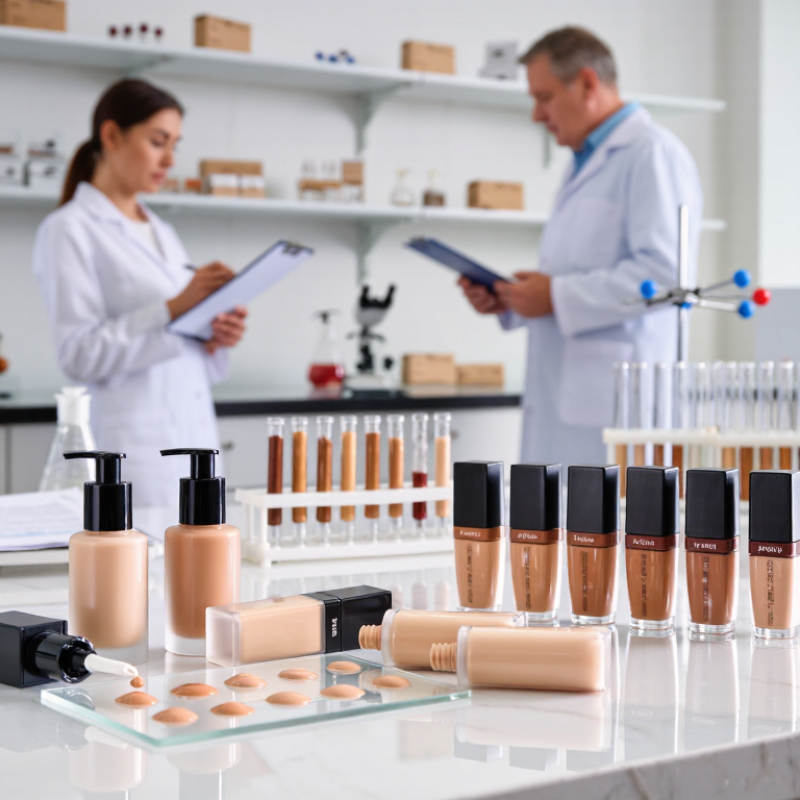
Shade planning deserves practical testing. Circana reported that U.S. prestige makeup sales increased 15% in 2023. This growth reflects stronger consumer interest, but shade expansion can increase sampling costs and inventory pressure. Ask suppliers for laboratory drawdowns, shade-adjustment records, stability data, microbial testing, and packaging compatibility results. Request performance tests on different skin tones and textures. Also confirm minimum order quantities, lead times, pigment sourcing, and documentation for every target market. A supplier may promise excellent coverage, but vague test conditions are a warning sign.
Tips: Build a requirement sheet before requesting quotations. Include reference shades, finish photographs, pump or wand details, and acceptable color variation. Test samples after heat, freezing, transport vibration, and repeated opening. I have learned that a beautiful first sample can separate after two weeks. That inconvenient result is useful. Revise the brief when evidence disagrees with your original idea. Check ingredient declarations and product claims with qualified regulatory professionals before launch.
Create a requirement sheet before requesting quotations. Include coverage, finish, skin types, undertones, shade range, and wear time. Specify resistance to sweat, humidity, transfer, or mask friction. Add reference shades and finish photographs. Small details prevent expensive revisions.
Request laboratory drawdowns and shade-adjustment records. Test samples on different skin tones and skin textures. Compare daylight, office lighting, and camera lighting. Check oxidation after eight hours. A shade can look perfect indoors and turn orange later.
Ask for stability data, microbial testing, ingredient specifications, and packaging compatibility results. Request clear test conditions and sample records. Confirm pigment sourcing and target-market documentation. Vague reports deserve careful questions.
A low minimum order supports demand testing but may increase unit costs. A higher quantity can reduce pricing and create excess inventory. Compare pilot, standard, and reorder scenarios. Forecasts can be wrong. Keep that possibility visible.
Compare the finished-unit price, not only the formula cost. Separate tooling, testing, filling, cartons, freight, and payment charges. Request all terms in writing. A cheap quotation may exclude important production expenses.
Ask for milestone dates covering sampling, revisions, material sourcing, filling, inspection, and shipping. Include buffer time for delays. Confirm what happens when deadlines are missed. Ten-day production may exclude testing or packaging work.
The supplier should assess pumps, wands, tubes, and closure systems. Request leakage, breakage, decoration adhesion, and filling-accuracy tests. Check recycled-content claims with documentation. An elegant package that clogs is still a failed package.
Request a named project manager, response standards, and escalation procedures. Ask about batch records and change-control notices. Consider a pilot order, supplier audit, and corrective-action process. A beautiful sample may separate after two weeks. That result is useful, though disappointing.
Choosing the right OEM Foundation and Concealer supplier begins with clearly defining your product requirements, including coverage, finish, shades, skin types, texture, packaging format, and target market. A well-prepared brief helps suppliers understand your expectations and provide accurate recommendations. You should then evaluate each supplier’s manufacturing expertise, formulation capabilities, production equipment, quality control systems, and ability to develop customized products consistently.
Before making a decision, verify formula safety, ingredient quality, testing procedures, and compliance with the regulations of your intended markets. Comparing samples is also essential for assessing performance, color accuracy, stability, and user experience. In addition, review minimum order quantities, pricing, payment terms, and production timelines to ensure the partnership fits your budget and launch schedule. Finally, consider the supplier’s communication efficiency, packaging and labeling support, responsiveness, and willingness to solve problems. A reliable long-term partner should offer transparent service, stable quality, flexible cooperation, and dependable delivery throughout the entire product development process.